
Licorice: The Great Candy Polarizer
| BY JOSH ROTHSTEIN
April 12th is National Licorice Day, and if there's one candy that gets people fired up, it's this one. Licorice doesn't inspire mild feelings. You either love it deeply — the kind of love that has you hunting down Finnish salmiakki at specialty import shops — or you'd rather eat the wrapper. There is no middle ground, and that's exactly what makes it such a fascinating product.
From ancient Egyptian medicine chests to the movie theater candy aisle, licorice has had one of the most surprising journeys in confectionery history. Today, it's a massive, diverse category with dozens of varieties that span continents, flavor profiles, and generations. If your store isn't carrying a strong licorice lineup, you're leaving real money on the table — because licorice fans are loyal. Let's dig in.
From Ancient Root to Global Candy Category: The History of Licorice
The story of licorice starts long before candy. Glycyrrhiza glabra — that's the scientific name for the licorice plant — is a flowering shrub native to the Mediterranean and parts of Asia. The root of this plant contains glycyrrhizin, a compound roughly 50 times sweeter than sugar. Ancient Egyptians used it as a medicinal tonic. Greek and Roman physicians prescribed it for coughs and digestive troubles. Chinese herbal medicine has referenced it for over 4,000 years.
The name itself comes from the Greek glykyrrhiza, meaning "sweet root." By the Middle Ages, licorice was being cultivated across Europe, particularly in England, where the town of Pontefract in Yorkshire became famous for its licorice production starting in the 17th century. The iconic Pontefract cake — a small, flat disc of pressed licorice candy stamped with an owl — is still produced today and is considered one of the oldest surviving confectionery traditions in the world.
Licorice candy as we know it began to emerge in the 18th and 19th centuries as confectioners discovered that the root extract could be mixed with sugar, flour, and binding agents to create chewable, shelf-stable treats. By the early 20th century, manufacturers in Europe and America were producing licorice in ropes, twists, pipes, and wheels. The modern licorice aisle was born.
Black vs. Red: The Great Divide
Here's where things get interesting — and where the love-it-or-hate-it divide really kicks in.
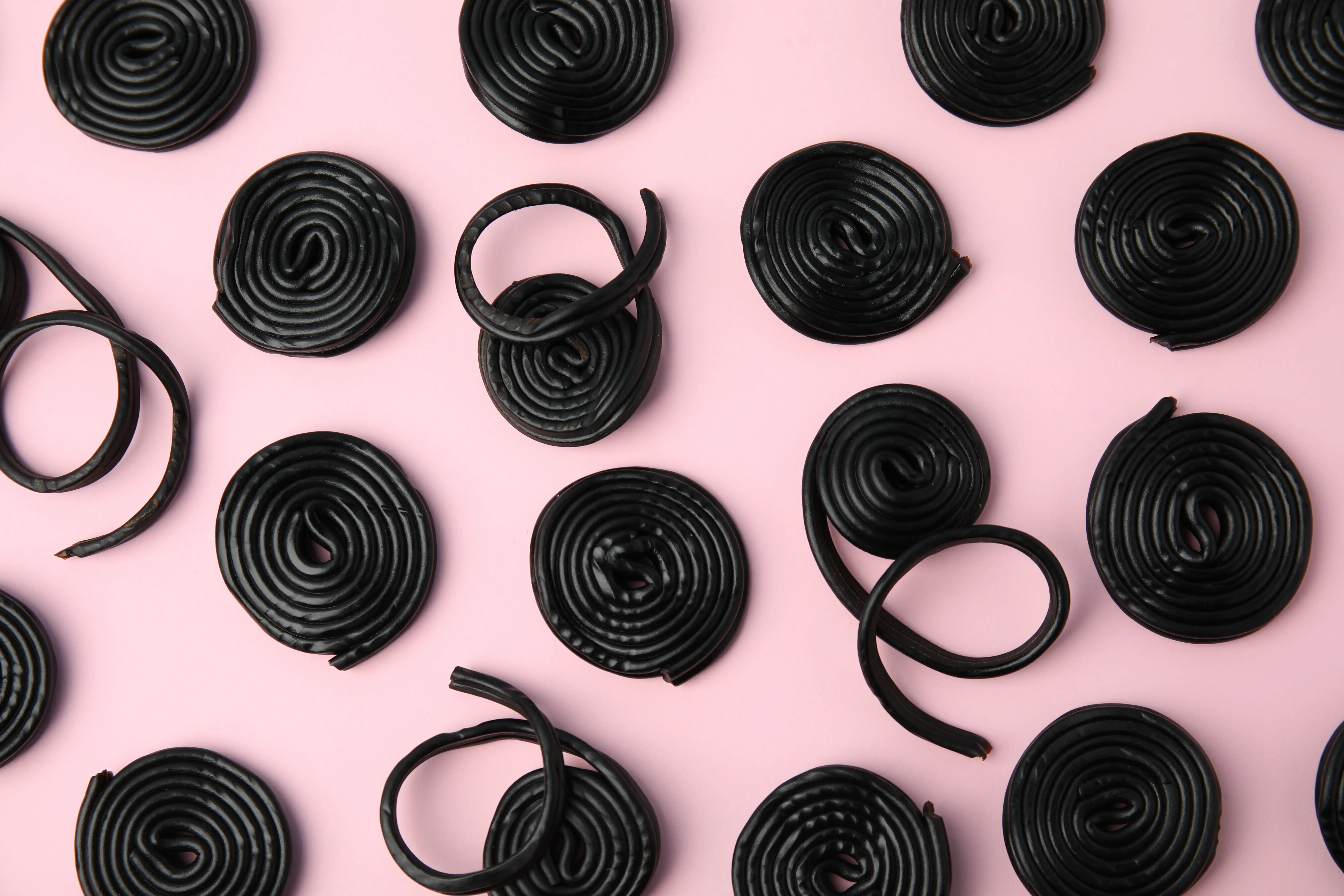
Traditional black licorice is made with actual licorice root extract, which delivers that intense, slightly medicinal, anise-like flavor that licorice purists are obsessed with. This is the real stuff. European licorice culture runs deep, particularly in Scandinavia and the Netherlands, where salted licorice (called salmiak or salt drop) takes the intensity even further by adding ammonium chloride for a sharp, almost briny kick. If you've never seen someone snack happily on jet-black, salt-forward Dutch licorice, you haven't fully explored the candy world.
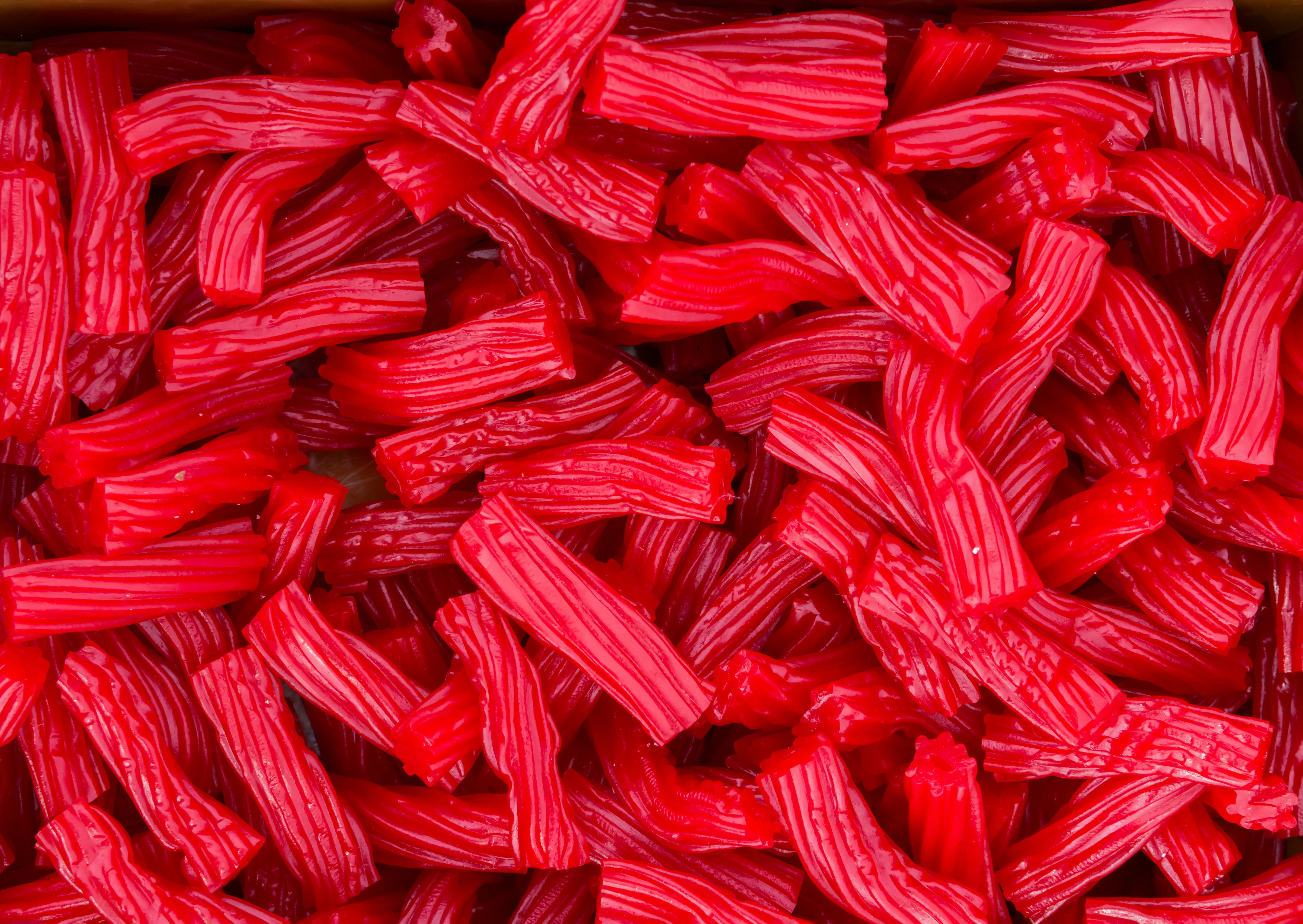
In the United States, the story shifted dramatically. American manufacturers began producing red licorice — typically flavored with strawberry or cherry and containing little to no actual licorice extract — in the early 20th century. Red Vines, which launched in the 1950s, became one of the most iconic examples of the American style: soft, fruity, and built for snacking rather than for the intense flavor experience of traditional black licorice.
This is why so many Americans say they "hate licorice" when they've actually never had real licorice at all. What they hate is the memory of a piece of black licorice that showed up uninvited in a Halloween candy haul. The two products share a name and a shape, but not much else.
Australian Licorice: The Style That Converts
If you want to turn a black licorice skeptic into a fan, Australian-style licorice might be your best sales tool.
Australian licorice is distinguished by its exceptionally soft, tender texture and its moderately sweet, less intense flavor profile compared to traditional European black licorice. It's made to be approachable — the licorice for people who thought they didn't like licorice. Brands producing this style use a softer bite and often offer flavors beyond traditional black, including strawberry, mango, and watermelon varieties, giving retailers a fantastic cross-sell opportunity between the classic and the contemporary.
For wholesale buyers stocking candy stores, this category punches above its weight. Soft-eating Australian-style licorice tends to display beautifully in bulk bins, convert impulse shoppers who wouldn't seek out licorice specifically, and deliver high repeat purchases once customers discover their preferred flavor.
The Candy Counter Case for Licorice
Let's talk business for a moment. Licorice is a category that rewards variety. A store carrying only one type of licorice — say, a single rope brand — is missing out on the full sales potential this category delivers. The shopper who grew up on Red Vines is not the same customer hunting for black licorice twists or soft Australian bites, but they can all exist happily in the same well-curated licorice section.
A few formats worth considering for your floor set:
- Classic twists and ropes (red and black) for the nostalgia shopper and the movie night buyer
- Soft Australian-style bites or pieces for the texture-forward shopper and the licorice-curious
- Bulk licorice allsorts — those colorful multi-layer candies popular in the UK and Australia — for the gourmet candy crowd
- Salt licorice for the specialty import customer and the adventurous snacker
Licorice allsorts, in particular, are one of those products that tend to drive conversation at the candy counter. They look distinctive, they have a history going back to 1899 (the story involves a candy salesman named Charlie Thompson accidentally mixing samples together for a Bassett's buyer — the buyer loved the mix), and they appeal to shoppers who want something that feels a little different.
National Licorice Day on April 12th also gives you a natural in-store merchandising moment. A dedicated end cap, a small table display, or even a simple shelf tag noting the holiday is enough to spark impulse purchases from customers who didn't walk in thinking about licorice.
Licorice in Pop Culture: More Appearances Than You'd Think
Licorice has earned a surprisingly prominent place in pop culture over the decades. As a classic movie theater candy, licorice ropes and twists have been a cinema staple for generations — you've seen them in the snack line, you've watched someone use a Red Vine as a straw for their soda, and you've definitely spotted a box of Red Vines in the background of a TV show set in the '80s or '90s.
The candy's distinctive look and polarizing reputation have made it an easy comedic prop. References to licorice have appeared in everything from sitcoms to animated shows over the years, almost always playing on the same joke: someone's weird for liking it, or someone's genuinely offended by the offering of it.
More recently, specialty and artisan licorice has had a quiet moment in the premium candy market, with craft producers exploring single-origin licorice root, innovative flavor pairings, and gourmet packaging that speaks to a more upscale buyer. This is a useful category signal for candy retailers: licorice has a premium tier worth exploring, not just a bulk-candy-bin tier.
Frequently Asked Questions About Licorice
What is the difference between black licorice and red licorice? Black licorice is made with extract from the Glycyrrhiza glabra root, which gives it a distinctive anise-like flavor. Red licorice — including popular brands like Red Vines — is typically flavored with fruit (usually strawberry or cherry) and contains little or no actual licorice root extract. They share a shape and a texture category but are genuinely different products.
What is National Licorice Day and when is it? National Licorice Day is celebrated annually on April 12th. It's an informal food holiday that recognizes one of the oldest and most divisive confections in the world — and a great opportunity for candy retailers to run in-store promotions or feature licorice products.
What is Australian-style licorice? Australian-style licorice refers to a softer, more tender variety of licorice with a less intense flavor than traditional European black licorice. It's widely considered more accessible to shoppers who find traditional black licorice too strong, and it comes in a range of fruit flavors in addition to the classic black variety.
What is salt licorice, and why is it so popular in Europe? Salt licorice, known as salmiak in Scandinavian countries and the Netherlands, combines licorice root extract with ammonium chloride, which gives it a sharp, salty, slightly briny flavor. It is an acquired taste for most North American palates but has a passionate following in Northern Europe. For specialty candy retailers, it's an excellent differentiation product that attracts adventurous shoppers.
Celebrate the Polarizer
Licorice has been around for thousands of years and has outlasted every trend, diet fad, and candy innovation that ever tried to push it off the shelf. It's polarizing by nature, and that's actually its secret weapon. People who love it really love it, and they seek it out specifically.
For candy store owners and wholesale buyers, that kind of dedicated loyalty is gold. A strong licorice assortment — classic twists, soft Australian styles, salt licorice, allsorts, and quality black licorice — gives every segment of that passionate audience something to find in your store.
Redstone Foods carries a wide range of wholesale licorice products to help you build out that assortment. Whether you're stocking for the nostalgia buyer, the adventurous snacker, or the movie-night crowd, we've got the selection to back it up. Browse our full product catalog at redstonefoods.com or reach out to set up your wholesale account with America's favorite candy distributor.
National Licorice Day is April 12th. Make sure your shelves are ready.